

ATHG-3435 - Athearn Genesis - HO GEN GP38-2 Locomotive w/DCC & Sound, SOO #4403
$0.00
$389.95
Athearn

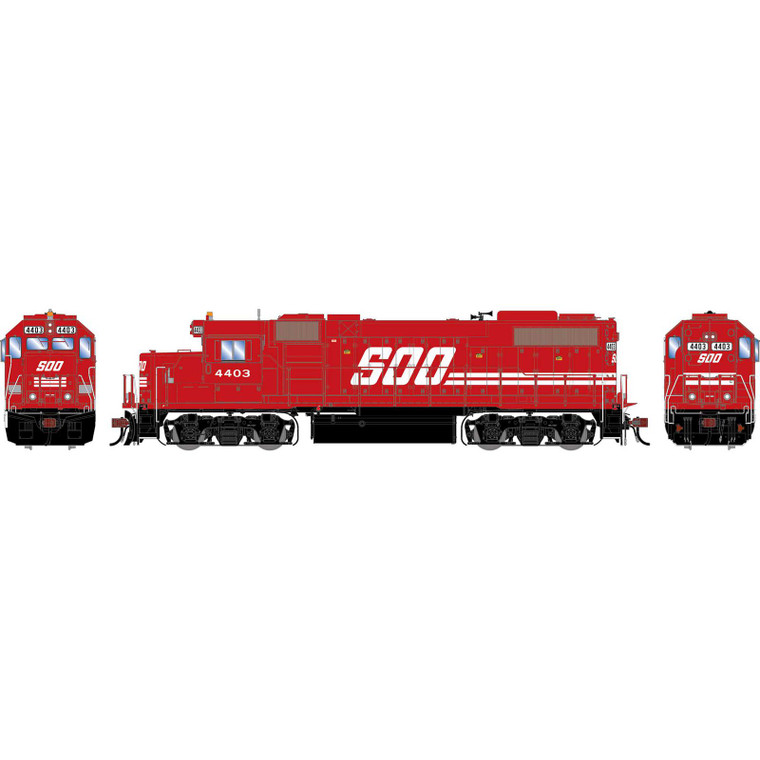
ATHG-3399 - Athearn Genesis - HO GEN GP38-2 Locomotive, SOO #4403
The Soo Line Railroad (SOO) operated a large fleet of EMD GP38-2 locomotives, acquiring them between 1977 and 1983 to serve as the backbone of its medium-horsepower freight and switching fleet. These versatile road switchers became a defining mechanical and visual presence across the Upper Midwest, where they earned a reputation for reliability and operational flexibility. The first GP38-2 was delivered in September 1977 as road number 790, later renumbered 4400. This initial group of ten locomotives featured the railroad’s distinctive red SOO lettering and marked the beginning of a major modernization program. Between 1978 and 1983, SOO expanded the fleet through additional production orders, ultimately rostering locomotives numbered 4400–4452. The fleet was further supplemented by GP38-2 locomotives acquired from Milwaukee Road (MILW) following its incorporation into the SOO. Later, SOO introduced its solid “candy apple red” paint scheme in 1989 to replace its classic white and red “hockey stick” scheme. SOO GP38-2 locomotives handled a wide variety of assignments, including branch line and local service, transfer runs, industrial switching, and yard operations.
By the early 1970s, many first generation diesels were reaching the end of their service lives. The most common replacement locomotive became the GP38-2. EMD began production of the 16-cylinder, non-turbocharged, 2000 horsepower engine in 1972. Unlike the GP38’s engine, which drove a generator to supply power to the traction motors, the GP38-2s prime mover drove an alternator which produced AC electrical current that was rectified to DC to power the four traction motors. Another major change for the GP38-2 was the introduction of the “dash 2” modular electrical cabinet. For more than 40 years, the GP38-2 has worked main line freights, locals, switching jobs, yard service, helpers, snow fighting trains, and hump power. Many remain in service today.
Athearn

Athearn